
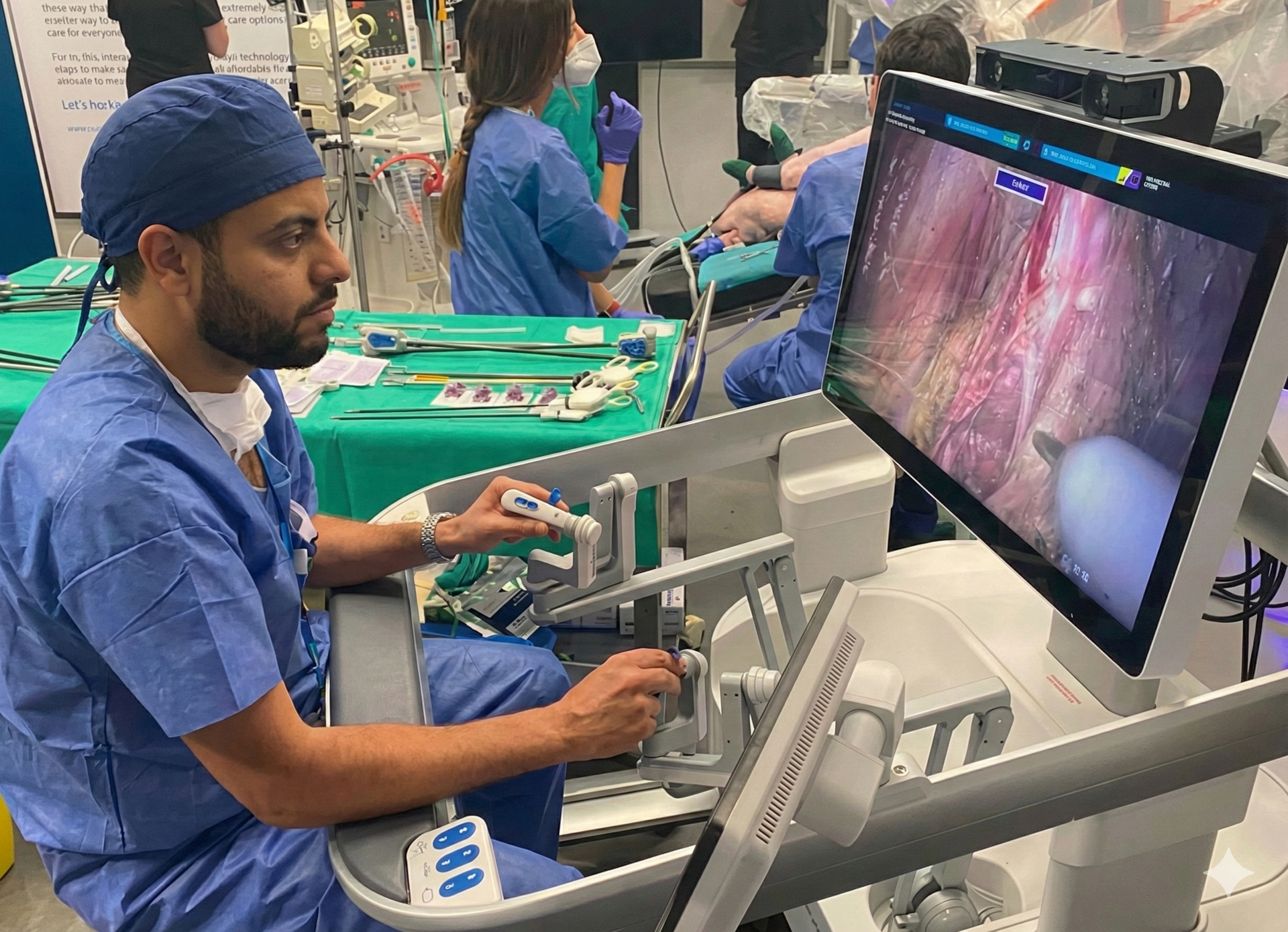
Artificial Intelligence Meets Clinical Radiology
Artificial intelligence (AI) is rapidly reshaping how physicians interpret medical images. From detecting subtle abnormalities on CT scans to predicting disease progression from MRI data, AI algorithms are becoming invaluable tools in the diagnostic workflow. In urology, AI applications are particularly promising for prostate cancer detection, kidney stone characterization, and bladder tumor staging.
How AI Enhances Diagnostic Accuracy
Traditional image interpretation relies entirely on the clinician’s experience and visual acuity. AI systems, trained on thousands or millions of labeled images, can identify patterns that may escape the human eye. Key advantages include:
- Consistency: AI does not suffer from fatigue, distraction, or inter-observer variability
- Speed: Algorithms can process and analyze images in seconds
- Quantification: AI can measure lesion volumes, densities, and growth rates with high precision
- Risk stratification: Machine learning models can correlate imaging features with clinical outcomes to guide decision-making
AI in Prostate Cancer Detection
One of the most active areas of AI research in urology is prostate cancer detection on multiparametric MRI. Deep learning models are being developed to automatically identify clinically significant lesions (PI-RADS 4–5) and reduce the number of unnecessary biopsies. Studies have shown that AI can achieve diagnostic accuracy comparable to experienced radiologists.
Dr. ElDeeb’s research focuses on improving the integration of AI-assisted image analysis into the clinical biopsy workflow, with the goal of increasing diagnostic yield while minimizing patient discomfort.
Beyond Prostate: Broader Applications
Kidney Stones: AI algorithms can analyze CT scans to predict stone composition, helping urologists choose the optimal treatment strategy.
Bladder Cancer: Automated analysis of cystoscopy images using AI can improve tumor detection rates during surveillance.
Renal Masses: Machine learning models are being trained to differentiate benign from malignant kidney tumors on CT and MRI, potentially reducing unnecessary surgeries.
The Human-AI Partnership
AI is not designed to replace physicians — it is a tool to augment clinical decision-making. The ideal model is a collaborative one, where AI provides quantitative analysis and pattern recognition while the clinician integrates this information with the patient’s full clinical picture.
Related Articles
- Prostate Health: What Every Man Should Know After 40
- Understanding Kidney Stones: Causes, Symptoms, and Treatment
- Biostatistics in Clinical Research: Why It Matters
Interested in how AI-enhanced diagnostics can improve your care? Reach out to Dr. Deeb to learn more.